In this article
What petrol, diesel and LPG cost in the EU
The question “how much does a kilometre cost me” cannot be answered with a single number in Europe. Pump prices differ between member states by tens of cents per litre, and household electricity prices vary even more across EU countries. We therefore rely on public data from the European Commission and Eurostat and give the cost per 100 km for clearly stated typical consumption.
In the reference week from 2 November 2026, the European Commission published an EU weighted average in the Weekly Oil Bulletin of €1,929.10 per 1,000 litres of Euro-super 95 petrol, i.e. €1.929/l, and €2,153.94 per 1,000 litres of diesel, i.e. €2.154/l. The prices include all taxes and excise duties. Automotive LPG cost an EU average of €0.911/l (€911.17/1,000 l).
The spread between countries is large. Both the cheapest petrol and the cheapest diesel were in Malta (€1.340/l and €1.210/l), the most expensive in Denmark (€2.498/l and €2.529/l). In Poland a litre of petrol cost €1.456 and a litre of diesel €1.812, in Germany €2.128 and €2.282, in France €2.158 and €2.371, in Spain €1.730 and €1.898 and in Slovakia €1.785 and €1.979. LPG in the countries that report it to the bulletin ranged from €0.641/l in Bulgaria to €1.130/l in Germany.
| Product (EU, week of 2 Nov 2026) | EU average | Lowest country | Highest country |
|---|---|---|---|
| Euro-super 95 petrol | €1.929/l | Malta €1.340/l | Denmark €2.498/l |
| Diesel | €2.154/l | Malta €1.210/l | Denmark €2.529/l |
| LPG (automotive) | €0.911/l | Bulgaria €0.641/l | Germany €1.130/l |
The bulletin publishes prices in euros per 1,000 litres; we divided them by a thousand to get the price per litre. These are consumer prices that the member states report to the Commission every Wednesday. The EU average is weighted by consumption, not a simple arithmetic mean.
What household electricity costs
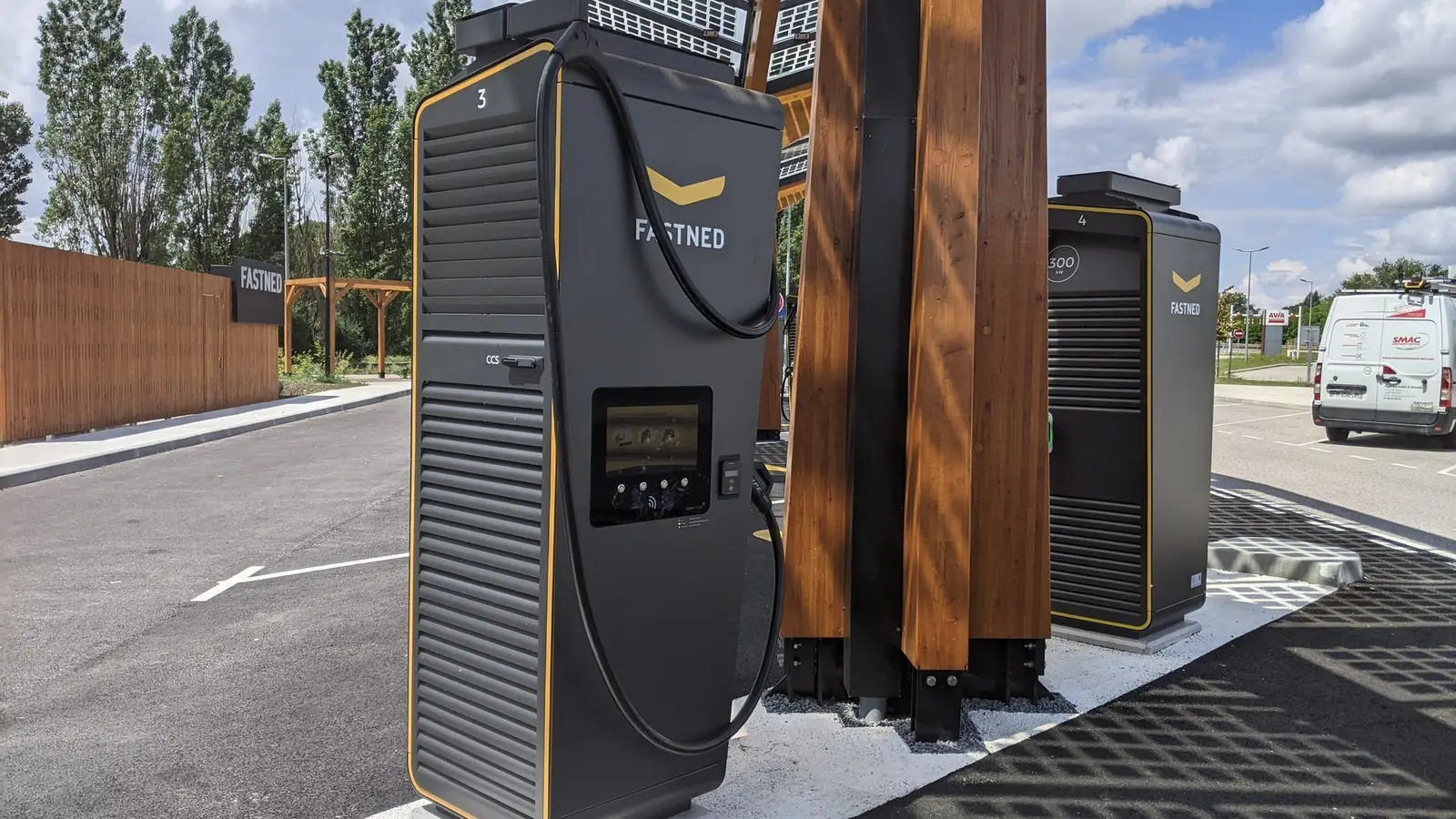
With an electric car, where you charge is what matters. Charging at home from the household grid is usually the cheapest option; public rapid chargers have their own tariffs and we do not include them in this calculation. For the first half of 2026, Eurostat reports an EU weighted average for households consuming 2,500 to 5,000 kWh per year of €0.2832/kWh including taxes, levies and VAT.
Here, too, the spread is large. The highest prices were in Ireland (€0.3871/kWh), Germany (€0.3618/kWh) and Belgium (€0.3575/kWh). The lowest were in Hungary (€0.1139/kWh), Malta (€0.1268/kWh) and Bulgaria (€0.1341/kWh). Compared with the second half of 2025, the EU average price fell by 2.2%, but it remains well above the level before the 2022 energy crisis.
Six countries reported prices above €0.30/kWh and five countries below €0.20/kWh. This means that the same electric car can have very different costs per kilometre in two member states, even with the same consumption.
Cost per 100 km at typical consumption
Prices alone are not enough. They have to be multiplied by consumption. In the table, we use the same typical values for all countries so that the effect of prices is visible: 6.5 l/100 km for a petrol compact, 5.0 l/100 km for a diesel compact, 8.0 l/100 km for LPG and 18 kWh/100 km for an electric car charged at home. These values are not an official EU average; they were chosen to make powertrains comparable. Your car may have different consumption depending on the model, driving style and season.
| Powertrain | Typical consumption | Price (EU average) | Cost per 100 km |
|---|---|---|---|
| Petrol | 6.5 l/100 km | €1.929/l | €12.54 |
| Diesel | 5.0 l/100 km | €2.154/l | €10.77 |
| LPG | 8.0 l/100 km | €0.911/l | €7.29 |
| Electric car (home) | 18 kWh/100 km | €0.2832/kWh | €5.10 |
Under these assumptions, charging an electric car at home costs, on the EU average, roughly half as much as a petrol car and less than half as much as a diesel car. LPG is cheaper than both petrol and diesel, but availability and the number of stations differ between countries, and not all states report LPG to the Oil Bulletin.
If we apply the same petrol consumption of 6.5 l/100 km to the extreme prices, 100 km costs about €8.71 in Malta and about €16.24 in Denmark. For diesel at 5.0 l/100 km it is roughly €6.05 in Malta and €12.64 in Denmark. For an electric car at 18 kWh/100 km, charging at home comes to about €2.05 in Hungary and about €6.97 in Ireland per 100 km.
What the numbers do not cover
The calculation covers only the energy for driving. It does not cover insurance, servicing, tyres, depreciation or tolls. Nor does it cover public charging: at a motorway rapid charger, a kilowatt-hour can be significantly more expensive than the household tariff reported by Eurostat. With a plug-in hybrid, it also matters what share of kilometres you drive on electricity; if you do not charge the battery regularly, petrol or diesel consumption approaches that of a conventional combustion-engined car.
When choosing between petrol and diesel for a used car, mileage and the type of journeys also play a role. We covered this in more detail in the article Used car with diesel or petrol? How to decide. You will find the overall picture of the new car market by powertrain in the article New car sales in the EU 2026: which powertrains are growing.
- Compare the same consumption. Official WLTP figures differ between models; for your own calculation, use the consumption from the on-board computer over at least several refuelling stops.
- Watch where you charge. The Eurostat household tariff is a good estimate for a wallbox or a socket at home. On the road, expect the price of the specific network.
- Prices change every week. The Oil Bulletin is published on Thursdays; Eurostat publishes electricity prices every six months. The current price per litre at the pump in your town may differ from the national average.
- A cheaper litre does not mean a cheaper kilometre. On the EU average, diesel is more expensive per litre than petrol, but with lower consumption it can be cheaper per 100 km. LPG is cheap per litre, but consumption in litres is higher.
What to take away
At the average EU prices of November 2026 and the stated typical consumption, 100 km costs about €12.5 on petrol, €10.8 on diesel, €7.3 on LPG and €5.1 when charging an electric car at home. However, the differences between countries are so large that the same car can have energy costs in two EU states that differ by several euros for every 100 km. Before deciding on a powertrain, therefore, check not only the official consumption but also the current Oil Bulletin and the half-yearly electricity price in the country where you will refuel or charge most often.
Key takeaways
- In the week from 2 November 2026, a litre of petrol in the EU cost €1.929 on average and a litre of diesel €2.154 (Weekly Oil Bulletin, including taxes).
- Automotive LPG cost €0.911/l on the EU average in the same week; across the reporting countries it ranged from €0.641/l to €1.130/l.
- For the first half of 2026, Eurostat reports an average EU household electricity price of €0.2832/kWh; highest in Ireland, lowest in Hungary.
- With typical consumption of 6.5 l / 5.0 l / 8.0 l / 18 kWh per 100 km, the cost comes to roughly €12.54 (petrol), €10.77 (diesel), €7.29 (LPG) and €5.10 (EV charged at home).
- The differences between countries are large: the same petrol compact can cost from about €8.7 per 100 km in Malta to €16.2 in Denmark.
FAQ
- Why is diesel more expensive per litre but can be cheaper per 100 km?
- On the EU average of 2 November 2026, a litre of diesel cost €2.154 and a litre of petrol €1.929. A diesel car in the same class usually has lower consumption; at our typical 5.0 l/100 km it comes to €10.77, while petrol at 6.5 l/100 km costs €12.54.
- Does the calculation include public charging of an electric car?
- No. We use Eurostat’s half-yearly household electricity price (€0.2832/kWh in the EU for the first half of 2026). Public and rapid-charging tariffs are set by each network’s contract and can be significantly higher.
- Where do the fuel prices come from?
- From the European Commission’s Weekly Oil Bulletin, reference week of 2 November 2026, prices including all taxes. The EU average is weighted by consumption; national values are reported by the member states.
- Are the consumption values of 6.5 l, 5.0 l, 8.0 l and 18 kWh an official EU average?
- No. They are typical values chosen to compare powertrains at the same prices. For your own calculation, use your car’s consumption from the on-board computer.
Comments
No comments yet. Be the first.
Add a comment
Your comment appears once the editors approve it. We never publish your email.
Do you sell cars?
A website for your dealership with a stock list that syncs itself from the listing portals. In 8 languages, ready in minutes.
30 days free, no card