In this article
The GTi is back, this time on electricity
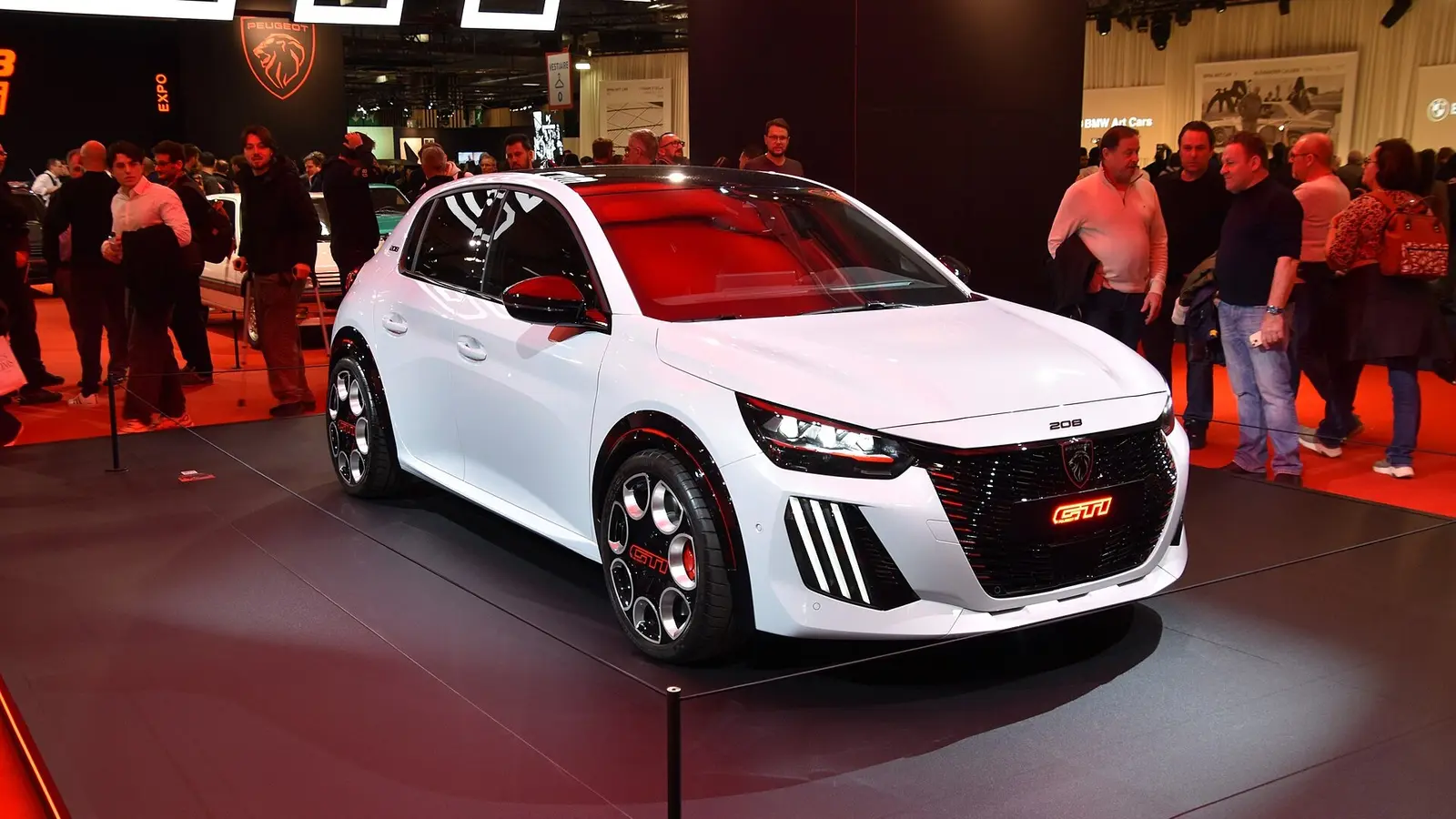
After many years, Peugeot is once again offering the 208 with the GTi badge. The new model is called the E-208 GTi and it is the brand’s first GTi powered solely by an electric motor. Peugeot presented the concept in 2025, unveiled the production version in June 2026 at the 24 Hours of Le Mans and opened orders at the same time. The manufacturer states that the production car differs only slightly from the concept.
Peugeot has used the GTi badge for four decades, since the famous 205 GTi. The previous generation of the 208 had a sporty version with a combustion engine; the current second generation had not received one until now. The technical development of the electric GTi was handled by the Peugeot Sport division, which also builds the 9X8 race car for endurance racing.
Power and acceleration
The car is driven by an M4+ electric motor with an output of 207 kW (281 hp) and a torque of 345 Nm. Power goes to the front wheels through a single-speed reduction gear with an integrated mechanical limited-slip differential. The motor is made at the French plant in Trémery, which belongs to Emotors, a joint venture of Stellantis and Nidec Leroy-Somer.
According to the manufacturer, the E-208 GTi accelerates from 0 to 100 km/h in 5.5 s, 0.2 s faster than Peugeot originally promised. It covers a standing-start kilometre in 25.8 s and accelerates from 80 to 120 km/h in 3.2 s. The top speed is electronically limited to 180 km/h. The weight-to-power ratio is 5.5 kg per horsepower, which according to Peugeot is the best figure in the small car class.
Battery, range and charging
The E-208 GTi uses the same battery as the standard E-208: gross capacity is 54 kWh, usable capacity 51 kWh. However, the Peugeot Sport engineers modified its cooling, in particular when and how much coolant flows depending on temperature. The aim is for the car not to reduce power even during longer spirited driving. In the press release, project manager Christophe Auriault states that, for example, when driving up a mountain pass, the driver should be able to stay in Sport mode the whole time without any power limitation.
The WLTP range depends on the tyres. With the standard Michelin Pilot Sport 4S, it is 352 km; with the Hankook Ventus S1 evo3 tyres, which are optional at no extra cost, it is up to 375 km. Combined consumption is 15.9 to 17.2 kWh per 100 km. On a 100 kW rapid charger, the battery charges from 20 to 80% in less than 30 minutes. The on-board charger handles 11 kW of alternating current, and on a 7.4 kW home wallbox charging takes approximately 4 hours and 40 minutes. Via the V2L function, the car can also power external appliances.
Chassis and brakes
Compared with the standard E-208, the body is 25 mm lower and the track is 56 mm wider at the front and 28 mm wider at the rear. The car rides on 18-inch wheels with 215/40 R18 tyres. A 31 mm anti-roll bar has been added at the rear, while the 17 mm front bar remains unchanged. The springs and dampers are specific and have hydraulic bump stops, which Peugeot Sport also uses in racing.
The front brakes have 355 mm discs and fixed four-piston calipers; the rear brakes are carried over from the standard E-208. The ESP stability system has a sport mode that gives the driver more freedom, for example on a circuit. In Sport mode, brake regeneration is also switched off. According to a test by the Czech magazine Auto.cz, the car weighs 1,610 kg with the driver.
Comparison with rivals and price
The Czech magazine Auto.cz names the Alpine A290 as a direct rival. We described another electric hot hatch from France in more detail in the article Renault 5 Turbo 3E: an electric hot hatch for Europe. The table shows the manufacturers’ figures for the most powerful versions.
| Model | Power | 0 – 100 km/h | Top speed | Battery | WLTP range |
|---|---|---|---|---|---|
| Peugeot E-208 GTi | 207 kW (281 hp) | 5.5 s | 180 km/h | 54 kWh (51 kWh usable) | 352 – 375 km |
| Abarth 600e Scorpionissima | 207 kW (280 hp) | 5.85 s | 200 km/h | 54 kWh (51 kWh usable) | 321 – 334 km |
| Alpine A290 GTS | 160 kW (220 hp) | 6.4 s | 170 km/h | 52 kWh | 364 km |
When orders opened, Peugeot stated a base price of 42,900 euros including VAT for the French market. In other EU countries, prices vary according to local taxes and equipment. Peugeot Care offers a warranty of up to 8 years or 160,000 km on both the car and the battery for the brand’s electric models.
Key takeaways
- The E-208 GTi has an M4+ electric motor with 207 kW (281 hp) and 345 Nm of torque, driving the front wheels through a limited-slip differential.
- According to Peugeot, it accelerates from 0 to 100 km/h in 5.5 s, and its top speed is limited to 180 km/h.
- The battery has 54 kWh (51 kWh usable); the WLTP range is 352 km on standard tyres and up to 375 km on optional tyres.
- The body is 25 mm lower, the track is 56 mm wider at the front and 28 mm wider at the rear, and the front brake discs measure 355 mm.
- In France it costs from 42,900 euros including VAT; in other EU countries the price differs.
FAQ
- What range does the Peugeot E-208 GTi have?
- According to the WLTP standard, it covers 352 km on the standard Michelin Pilot Sport 4S tyres and up to 375 km on Hankook Ventus S1 evo3 tyres, which are optional at no extra cost.
- How quickly does the E-208 GTi charge?
- On a 100 kW rapid charger, the battery charges from 20 to 80% in less than 30 minutes. On a 7.4 kW wallbox, charging takes approximately 4 hours and 40 minutes.
- How does the E-208 GTi differ from the standard E-208?
- It has a more powerful 281 hp motor, a limited-slip differential, a lower body, a wider track, a rear anti-roll bar, specific dampers and larger front brakes. The battery has the same capacity but modified cooling.
Comments
No comments yet. Be the first.
Add a comment
Your comment appears once the editors approve it. We never publish your email.
Do you sell cars?
A website for your dealership with a stock list that syncs itself from the listing portals. In 8 languages, ready in minutes.
30 days free, no card


