In this article
An automatic gearbox is no longer the preserve of luxury cars. On the used-car market, you will find it in small hatchbacks, family estates and SUVs alike. Behind the same letter D on the selector, however, there are designs that work in completely different ways, wear differently and need different care. Anyone who knows, when buying a used car, which type of automatic it has and how it has been treated so far significantly reduces the risk of an expensive repair. This guide explains the differences between the main types, their typical weak points, why the oil history matters and how to check the gearbox on a test drive and in the diagnostics.
Which automatic gearboxes you will find in used cars
In European cars, you will most often come across two designs: the classic torque-converter automatic and the dual-clutch gearbox. The German motoring club ADAC states that the continuously variable CVT is less common and often appears in hybrid models from Asian brands. A fourth option is the automated manual gearbox, which only a few new models still offer today.
- The torque-converter automatic transmits power from the engine through the converter’s oil fill and planetary gear sets. According to ADAC, modern versions usually have 6 to 9 speeds and shift smoothly without any interruption in traction.
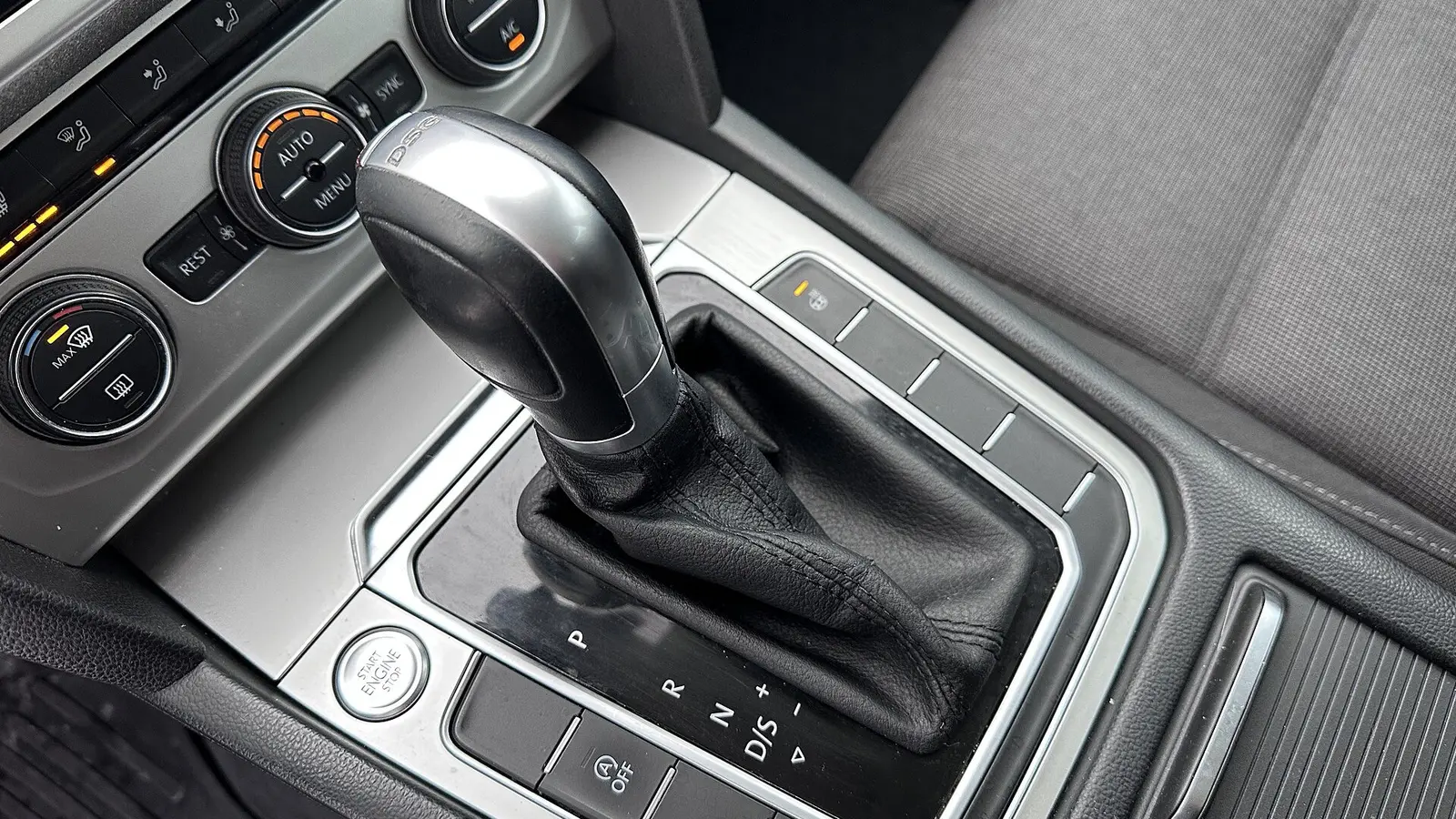
- The dual-clutch gearbox (DSG, DCT, S tronic, PDK and other trade names) is essentially two manual gearboxes in one housing. One handles the odd gears, the other the even ones, and each has its own clutch. The next gear is therefore preselected, and a shift takes a fraction of a second. It usually has 6 to 8 speeds.
- The CVT changes the gear ratio continuously, without fixed gears, much like a scooter’s variator. This keeps the engine at ideal revs, and acceleration is free of jerks.
- The automated manual gearbox is a classic manual gearbox in which the clutch and shifting are controlled electronically. It is cheap but slow: because of the slow shifts, ADAC recommends it only for very calm drivers.
With dual-clutch gearboxes, there is one more important difference. According to ADAC, less powerful engines with torque of up to about 250 Nm use dry clutches, which are smaller and lighter. More powerful drivetrains have multi-plate clutches running in an oil bath, known as wet clutches. In a listing, it is therefore not enough to know that the car has a DSG. You also need to find out the exact gearbox designation.
Typical weak points of each type
No gearbox lasts forever. Mechanical parts and electronics wear out in manual and automatic gearboxes alike. Each type, however, has different sensitive spots and a different driving style that harms it.
The torque-converter automatic is considered the most robust under heavy use. ADAC recommends it for those who often tow a trailer or drive in the mountains, because it is the only type that allows pulling away through the converter without wearing a friction clutch. The price is slightly higher fuel consumption and larger dimensions. It is particularly sensitive to the condition of the oil: as symptoms that call for an oil change with a flush, the gearbox manufacturer ZF lists jolts when shifting, delayed shifts, noises and jerking when pulling away. These can be caused by dirt in the gearbox’s hydraulic control, deposits or abrasion from the friction linings.
The dual-clutch gearbox is compact, fast and economical. ADAC states that, compared with a torque-converter automatic, it can save up to 10% of fuel. Its weak point tends to be comfort during slow manoeuvres: after a gear is engaged, some versions pull away with a delay and jerkily, which is irritating when parking and in queues. According to ADAC, this mainly concerns dry-clutch versions with smaller engines. ADAC also points out that in recent years the seven-speed DSG DQ200 with a dry clutch, used in Volkswagen, Audi, Seat and Škoda vehicles, has caused particular problems. The most common failure was the so-called mechatronics, the unit combining the control electronics, oil pump and actuators. Sensors and clutches also had problems. According to ADAC, replacing the whole part costs more than €2,000.
A bad habit of many drivers also harms a dual-clutch gearbox. ADAC warns that creeping forward slowly at traffic lights with the brake half released means driving with a slipping clutch. Over time this can damage the clutch, and sooner still uphill and with a trailer. If the previous owner drove mainly in town, it is therefore worth paying closer attention.
The CVT offers smooth driving without gear changes, but ADAC also describes its typical behaviour: under hard acceleration the engine drones unpleasantly, because the revs are not tied to the speed. This is not a fault but a characteristic, and you should try it to see whether it suits you. With a CVT, even more than with other types, it is important to follow the maintenance schedule and the oil type specified by the car manufacturer.
Oil history: the most important paperwork when buying
Car manufacturers often do not specify regular servicing for automatic gearboxes. Experts see it differently. ADAC recommends changing the oil in automatic gearboxes roughly every 60,000 to 100,000 km, and for a torque-converter automatic roughly every 100,000 km including a flush. According to the motoring club, this can significantly extend service life and preserve shifting comfort.
In its list of lubricants, the gearbox manufacturer ZF states that its five-, six-, eight- and nine-speed automatics are filled for life, but because of the many influencing factors it recommends an oil change after 150,000 km. ZF considers it sensible to change the oil earlier at high temperatures and under load, and also in the case of unknown previous use of the car. That is exactly the situation of most used-car buyers.
With dual-clutch gearboxes, the intervals are often fixed. ADAC states that for its widely sold DSG gearboxes, Volkswagen in some cases specifies an oil change every 60,000 km. The magazine auto motor und sport gives the following intervals for three widespread group DSG gearboxes:
| Gearbox | Type | Oil change |
|---|---|---|
| DQ250 | 6-speed DSG | every 60,000 km |
| DQ381 | 7-speed DSG | every 120,000 km |
| DQ200 | 7-speed DSG with dry clutch | not required according to the manufacturer |
At the viewing, therefore, ask for invoices recording the odometer reading and the date. The invoice should name the specific oil that the manufacturer has approved for the gearbox in question. ZF warns that an unsuitable oil can cause serious shifting problems and over time damage the linings of the clutches and brakes inside the gearbox. For a flush, ZF does not recommend cleaning additives, because they can irreversibly damage the linings.
There is also a difference between an ordinary oil change and a flush. The Bosch Car Service network states that with a simple drain, up to 50% of the old fill can remain in the torque converter. ZF explains that a flush replaces all the oil, including that in the converter. If the seller claims the oil has been changed, ask how it was done.
Test drive: what to focus on
ADAC recommends a thorough test drive before buying a car with an automatic, because that is where its advantages and disadvantages show best. With a used car, it is also the cheapest form of diagnostics. If possible, start with the car cold and drive long enough for the gearbox to warm up. Check the following situations in particular:
- Engaging a gear when stationary. With the brake pressed, switch between P, R, N and D. The gear should engage quickly and without a hard jolt.
- Pulling away and driving slowly. Pull away from a standstill several times, including uphill, and try creeping forward as in a queue. Jerking, juddering or a long delay are a warning sign with a dual-clutch gearbox.
- Smooth acceleration. With light throttle, the gearbox should shift unobtrusively. The revs must not rise without the car accelerating, as this may indicate slipping.
- Kickdown. When you press the accelerator hard, the gearbox should shift down one or more gears without hesitation. With a CVT, listen to whether the engine noise bothers you.
- Braking to a stop. When slowing down, watch whether the gearbox shifts down smoothly and without jolts.
- Manual mode and reversing. Try shifting with the paddles or the selector, and reverse slowly as when parking.
According to ZF, any jolt when shifting, delay, unusual noise or jerking when pulling away is a sign that the gearbox needs attention. It need not mean an immediate fault, but it is not a condition you should accept without an explanation and without it being reflected in the price. You will find further inspection points that apply to every used car in our guide Used SUV: what to check before you buy.
Diagnostics, servicing and what to put in the contract
After the test drive, have the car connected to diagnostics. The workshop will read out the fault codes stored in the gearbox control unit. At the same time, have it checked whether the gearbox is leaking oil. For a gearbox with a fixed interval, compare the service records with the mileage: a car with a DSG DQ250 and 150,000 km on the clock should have had at least two oil changes.
So which choice is sensible? According to ADAC, an automatic, whether dual-clutch or torque-converter, suits most cars from the mid-size class upwards very well. If you plan to tow a trailer or drive in the mountains, ADAC recommends a torque-converter automatic. A dual-clutch gearbox is economical and fast, but with a dry clutch and city driving it calls for a more careful choice. What matters, then, is the exact gearbox designation and its documented history. If you are also still weighing up the fuel, our article will help you: Used car: diesel or petrol? How to decide.
Also bear the condition of the gearbox in mind when you sign. If you buy from a trader, Directive (EU) 2019/771 makes the trader liable for defects that become apparent within two years of delivery. For second-hand goods, member states may allow the seller and the buyer to agree on a shorter period, but not shorter than one year. A defect that becomes apparent within one year is presumed to have existed at the time of delivery; some countries extend this period to two years. You should therefore have the gearbox type, the declared condition, the most recent oil changes and the diagnostic result written into the contract. This protection does not apply when you buy from a private individual, which makes a written record all the more important.
Key takeaways
- According to ADAC, a torque-converter automatic usually has 6 to 9 speeds, shifts smoothly and is the best choice for towing a trailer and driving in the mountains.
- A dual-clutch gearbox (DSG, DCT) can save up to 10% fuel compared with a torque-converter automatic; dry clutches, used with engines of up to about 250 Nm, tend to be less comfortable when pulling away.
- ADAC recommends changing the oil in automatic gearboxes roughly every 60,000 to 100,000 km; where a car’s history is unknown, ZF advises changing it before 150,000 km.
- For some DSG gearboxes, Volkswagen specifies an oil change every 60,000 km; when buying, ask for invoices showing the mileage and the type of oil.
- According to ZF, jolts when shifting, delays, noises or jerking when pulling away are a sign that the gearbox needs attention.
FAQ
- Which automatic gearbox is the least risky in a used car?
- There is no universal answer; what matters is the specific type and its history. ADAC recommends a torque-converter automatic for towing a trailer and driving in the mountains. A dual-clutch gearbox is economical and fast, but with a dry clutch and city driving it calls for a more careful choice. Always check the exact gearbox designation and the records of oil changes.
- Should the oil in an automatic gearbox be changed if the car manufacturer does not specify a change?
- Experts recommend it. ADAC advises changing the oil roughly every 60,000 to 100,000 km, and for a torque-converter automatic roughly every 100,000 km including a flush. For its automatics, ZF recommends a change after 150,000 km, and earlier if the car’s past is unknown.
- Is an ordinary oil change enough, or is a flush needed?
- With a torque-converter automatic, a simple drain can leave up to 50% of the old oil in the converter, as Bosch Car Service states. According to ZF, a flush replaces all the oil, including that in the converter. Only oil approved for the gearbox in question should be used, and ZF does not recommend cleaning additives.
Comments
No comments yet. Be the first.
Add a comment
Your comment appears once the editors approve it. We never publish your email.
Do you sell cars?
A website for your dealership with a stock list that syncs itself from the listing portals. In 8 languages, ready in minutes.
30 days free, no card