In this article
Why a used SUV deserves a stricter inspection
A family SUV is heavier and taller than an ordinary hatchback and often has a more complex drivetrain. The extra weight puts more strain on the brakes, tyres, wheel bearings and suspension mounts. Many SUVs also have all-wheel drive, an automatic gearbox and a range of driver assistance systems that are not cheap to repair once the warranty has run out. So during an inspection it is not enough to look at the paint and the interior and drive once around the block.
This guide is written to apply wherever you buy in the European Union. It does not replace a professional inspection at an independent garage, but it will help you spot warning signs before you pay a deposit. If you are also deciding between a diesel and a petrol engine, read our article Used car: diesel or petrol? How to decide.
Vehicle history and odometer reading
Start with the paperwork, not the car. Ask for the service book or a printout of the electronic service history, invoices for major repairs and roadworthiness test certificates. For each entry, note the date and the mileage. The figures should rise steadily over time. A drop in mileage or a long period without a single entry is a reason to ask questions.
Odometer tampering is still common in Europe. A 2018 European Parliament study estimates that it may affect up to 50% of cars sold across borders between member states. According to the same study, in countries that joined the EU later, imported cars are two and a half to three times more likely to have a rolled-back odometer. Directive 2014/45/EU on roadworthiness tests therefore requires the test certificate to show the odometer reading and the inspector to have the reading from the previous test. Under the directive, odometer tampering must be punishable.
- Compare the mileage in roadworthiness test reports, service records and on the instrument panel.
- Check the wear on the steering wheel, gear lever, pedals and driver’s seat. A heavily worn interior does not match low mileage.
- With an imported car, ask for documents from the country of origin and check that the VIN on the body, in the documents and in the service records is the same.
Chassis, brakes, tyres and 4×4 drive
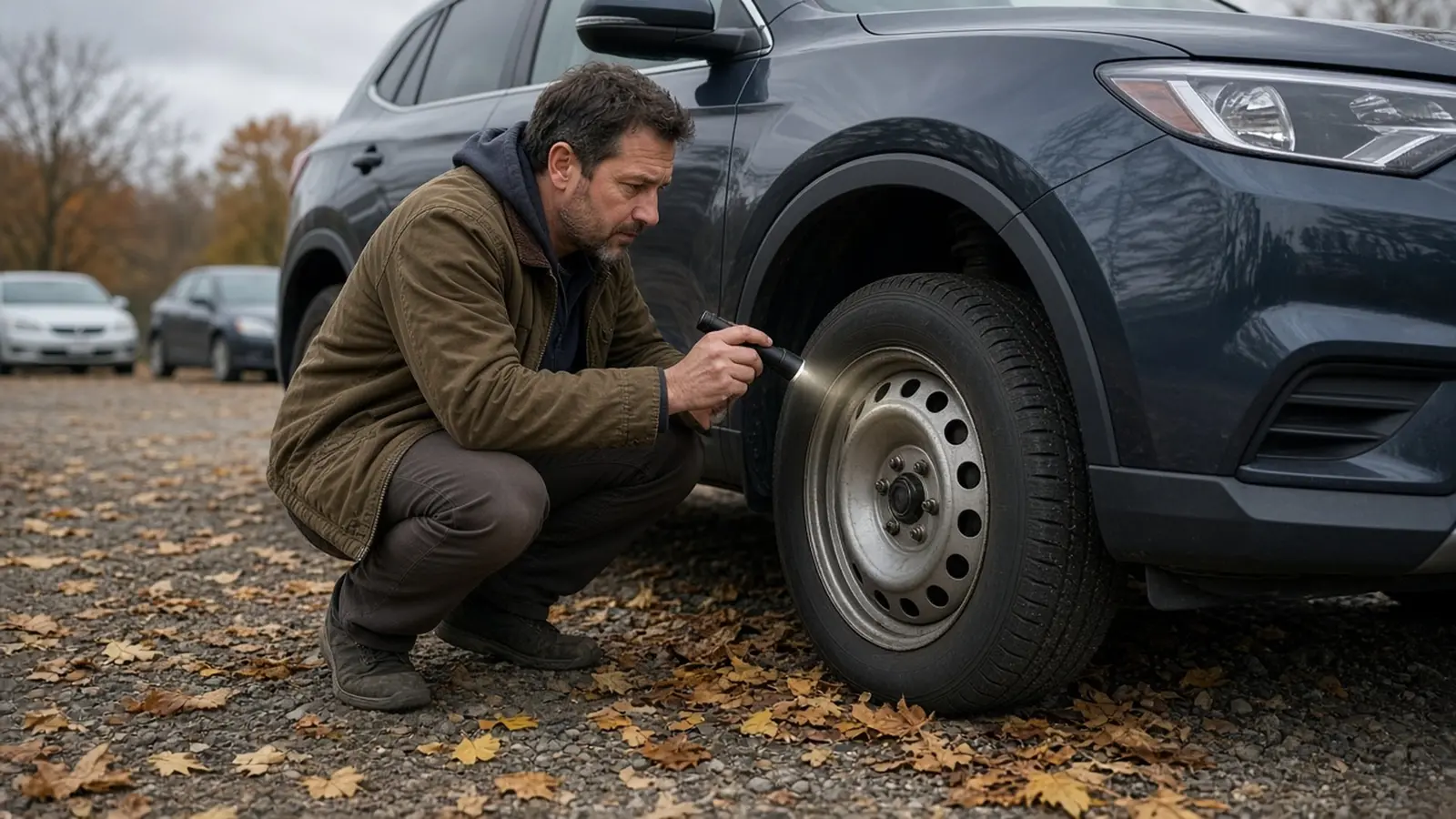
With an SUV, it pays to spend the most time on the chassis. If you can, have the car raised on a lift. Look for rust on load-bearing parts, damaged sills, signs of an impact, torn boots and leaking oil or fluid. The same areas, namely brakes, steering, axles, wheels, tyres, suspension and chassis, are listed in Annex I of Directive 2014/45/EU among the items a roadworthiness test must check throughout the EU.
Brake discs should not have deep grooves or a pronounced lip on the outer edge. Look at the tyres too. Unevenly worn tread often reveals poor wheel alignment or worn suspension parts. Under Directive 89/459/EEC, the minimum tread depth in the main grooves is 1.6 mm. If the tyres are close to this limit, factor their replacement into the price of the car.
With all-wheel drive, find out which system the car has and ask about oil changes in the gearbox and in the rear-axle coupling or differential, if the manufacturer specifies them. All four tyres should be the same size and similarly worn, because a difference in wheel circumference can strain the drivetrain. During the test drive, take a tight turn at low speed and notice whether the car hops, creaks or knocks.
Also look at the bodywork closely and in daylight. Different paint shades between panels, uneven gaps around the doors and bonnet, or paint residue on the seals reveal accident repairs. Look for moisture and rust under the boot carpet and under the spare wheel. A wet carpet or a musty smell may mean a leak that is hard to fix.
Electronics, assistants and equipment
Newer SUVs have cameras, radars and sensors that run lane keeping assist, emergency braking and adaptive cruise control. After a windscreen replacement or a front bumper repair, they need to be recalibrated. Ask whether such repairs have been done and whether there is proof of calibration.
- Warning lights: when you switch on the ignition, they should light up briefly and go out after the engine starts. A warning light that does not come on at all may have been disconnected.
- Diagnostics: reading the fault memory at a garage will also show deleted or intermittent faults.
- Equipment: test the air conditioning, heating, electric windows, tailgate, parking sensors, camera and infotainment, including phone connection.
- Keys: ask for all the keys that belong to the car. A spare key with an immobiliser tends to be expensive.
Also ask whether the car has an outstanding manufacturer recall. An authorised dealer for the brand can check this using the VIN. If the car has a tow bar, ask what it towed and how often. Regularly towing a heavy trailer puts more strain on the clutch, gearbox, brakes and cooling.
The test drive step by step
Allow at least half an hour for the test drive and include town driving, a faster road and an uneven surface. Ideally, start with a cold engine. Before you arrive, ask the seller not to start the car, because a warm engine can hide starting or noise problems.
- When starting, listen for unusual noises and check whether blue or thick white smoke comes from the exhaust.
- An automatic gearbox should shift smoothly, without jerking or slipping. A manual clutch should not bite only at the very top.
- On a straight road, the car should not pull to one side when you let go of the steering wheel, and the wheel should be straight.
- Under harder braking, the car should not swerve and the pedal should not pulsate unless ABS is intervening.
- On uneven surfaces, listen for knocking from the chassis and watch whether the body settles quickly after a speed bump.
After the drive, leave the engine running, open the bonnet and check whether oil or coolant is leaking anywhere.
Contract, guarantee and what to leave to a professional
When you buy from a dealer, you have a legal guarantee of at least two years throughout the EU. According to the Your Europe portal, for a used car you can agree with the dealer on a shorter period in some countries, but not shorter than one year, and this must be clearly stated at the time of purchase. If a defect appears within one year of delivery, it is presumed to have existed at the time of sale unless the dealer proves otherwise. A purchase from a private individual is not covered by these rules, so a thorough inspection is even more important.
In the purchase contract, state the mileage, known defects, the number of keys and the documents handed over. If something does not add up during the inspection, have the car checked at an independent garage or a testing station before you sign. The inspection result is also a good argument when negotiating the price. If the seller refuses a professional inspection, take it as a warning. Agree on who pays for any transfer fees and who handles deregistration and registration of the vehicle, and never pay the full amount before you have checked the VIN and the documents on the spot.
Used car with an automatic: which gearboxes are a sensible choice
Key takeaways
- According to a European Parliament study, up to half of cars sold across borders within the EU may have a rolled-back odometer.
- Directive 2014/45/EU requires the mileage to be recorded on the roadworthiness certificate, so compare the readings in all test reports.
- With an SUV, spend the most time on the chassis, brakes, tyres and 4×4 drive, ideally with the car on a lift.
- When you buy from a dealer, the legal guarantee lasts at least two years; for a used car it can be shortened to no less than one year.
FAQ
- How can I tell whether a used car has a rolled-back odometer?
- Compare the mileage in roadworthiness test reports, service records and on the instrument panel. The figures must rise over time. Comparing it with the wear on the steering wheel, pedals and driver’s seat also helps.
- Am I entitled to a guarantee on a used car?
- If you buy from a dealer, yes, for at least two years throughout the EU. In some countries a shorter period can be agreed for a used car, but not shorter than one year. These rules do not apply when you buy from a private individual.
- Is it worth paying for a pre-purchase inspection?
- With an SUV, usually yes. An independent garage will uncover hidden defects in the chassis, drivetrain and electronics, and the result will help you negotiate the price.
Comments
No comments yet. Be the first.
Add a comment
Your comment appears once the editors approve it. We never publish your email.
Do you sell cars?
A website for your dealership with a stock list that syncs itself from the listing portals. In 8 languages, ready in minutes.
30 days free, no card


